
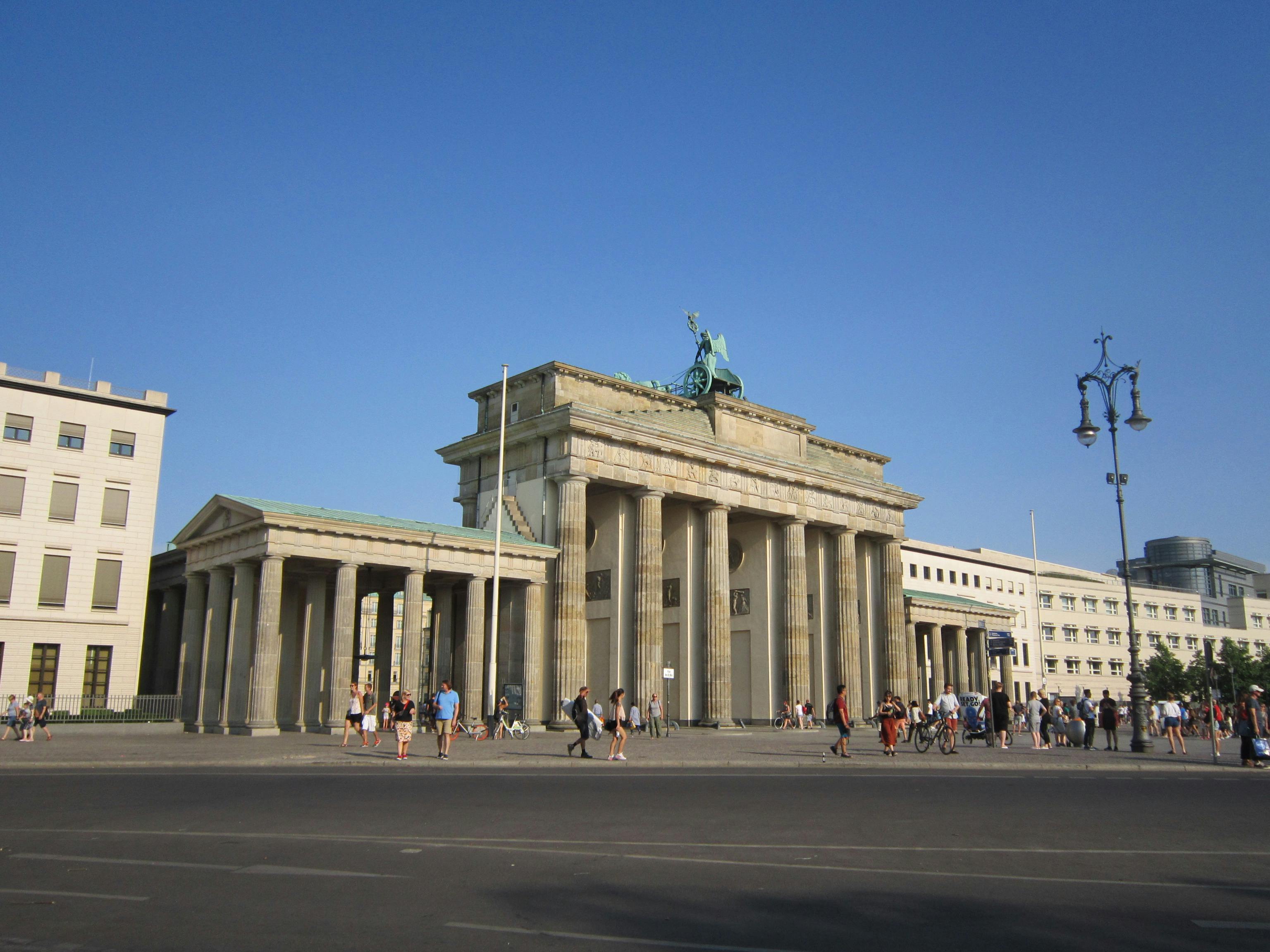
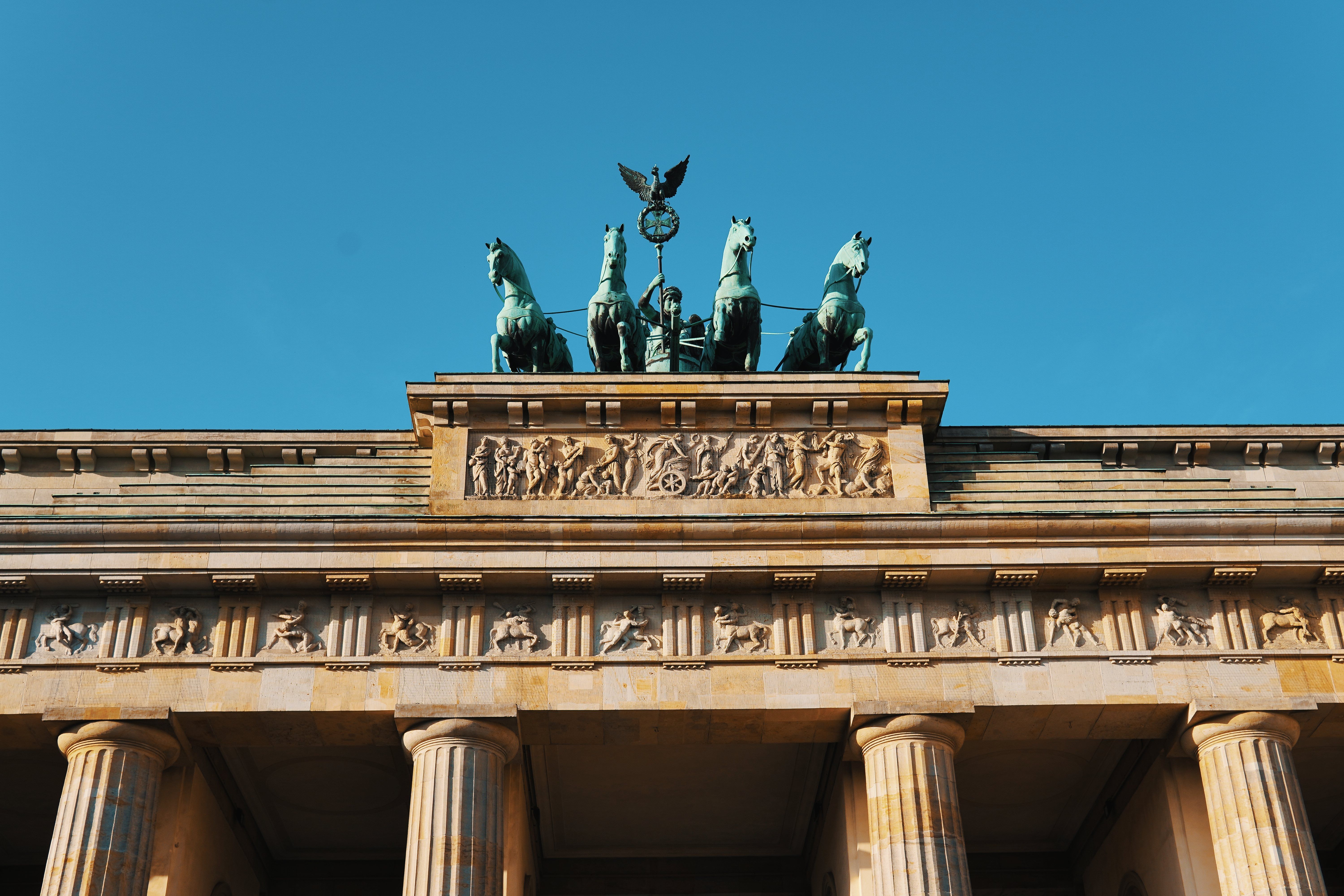
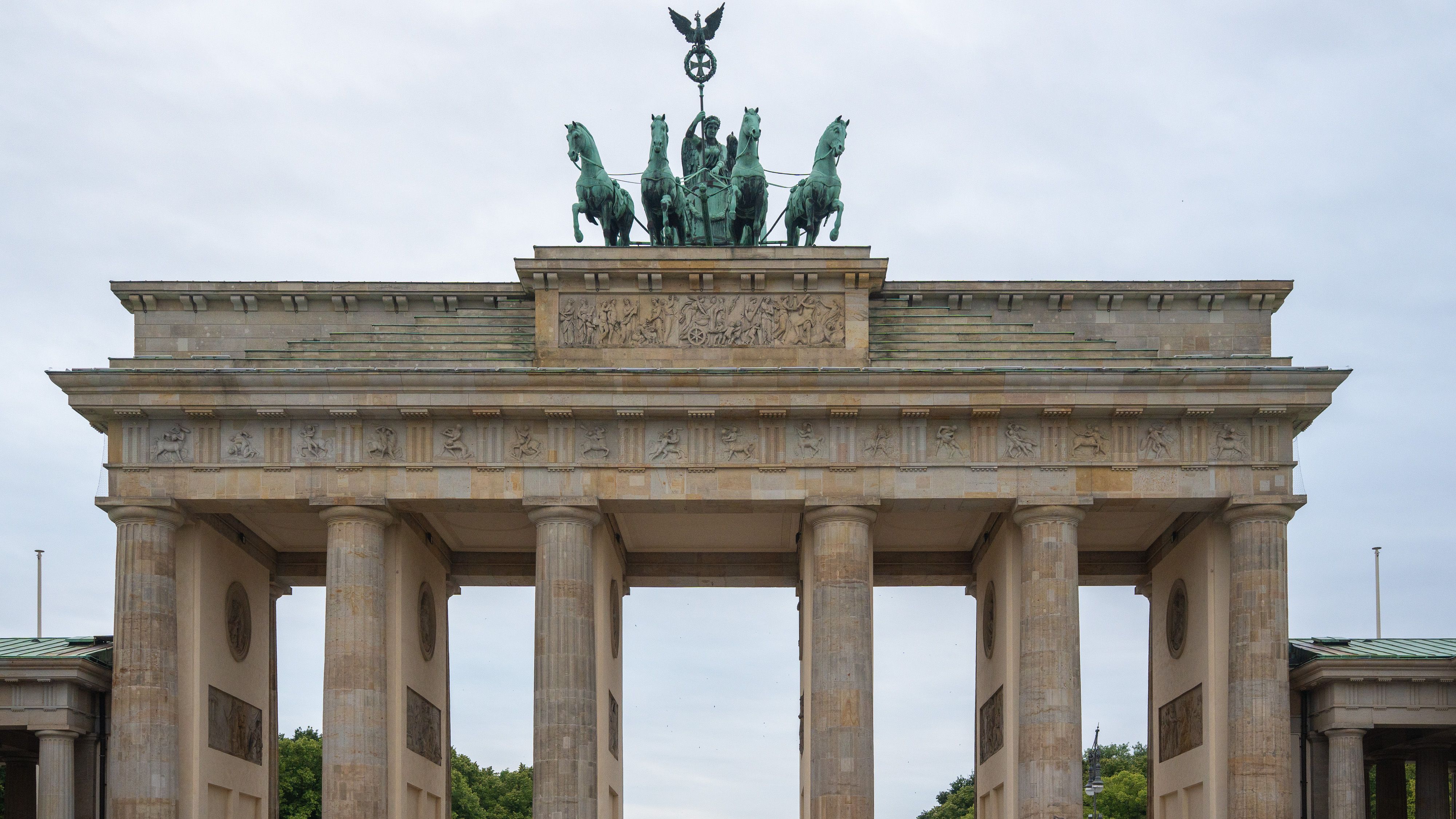
Berlin wears its history openly — Cold War division, postwar reconstruction and reunification are all visible within a short walk of each other in the city centre. It's also one of Europe's more affordable capitals to visit, and several of its biggest landmarks, including the Brandenburg Gate, cost nothing to see.
Brandenburg Gate and the Reichstag
The Brandenburg Gate, built in 1791 and now Berlin's symbol of reunification, can be visited freely at any hour. A short walk away, the Reichstag — Germany's parliament building — has a striking glass dome open to visitors, also free, but online registration in advance is required and slots fill up.
Museum Island
A UNESCO World Heritage Site, Museum Island holds five major museums — the Altes Museum, Neues Museum, Alte Nationalgalerie, Bode-Museum and the Pergamonmuseum — covering more than 6,000 years of art and cultural history in one compact area.
Cold War History
Remnants of the Berlin Wall, including the East Side Gallery's painted sections, sit alongside Checkpoint Charlie and several dedicated memorials. A two-day visit usually allows enough time to cover both this history and the city's classical landmarks without rushing.
Getting Around
Berlin's U-Bahn and S-Bahn network covers the city well, and most central sights cluster within or near Mitte, making a centrally located hotel the easiest base for walking between landmarks.
Loading comments…