

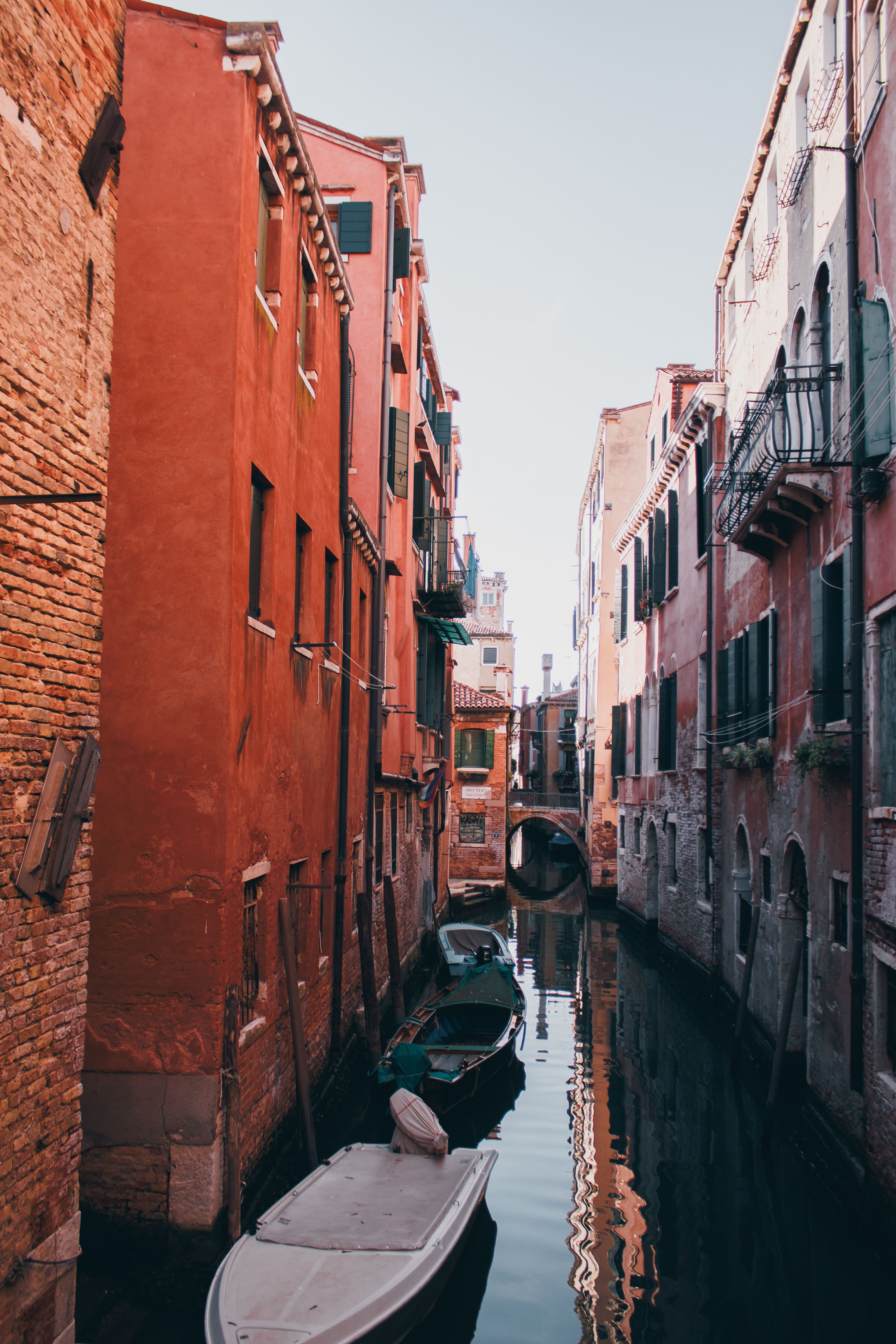
Venice is built across more than a hundred small islands in a lagoon, with canals in place of roads and boats in place of cars. It's compact enough to cover much of the historic centre on foot, but its biggest sights — the Doge's Palace and St. Mark's Basilica — draw long queues, and a gondola ride is worth treating as a planned activity rather than a spontaneous one.
Doge's Palace and St. Mark's Basilica
The Doge's Palace was the seat of Venetian government for centuries, with council rooms and audience halls decorated with work by Veronese and Tintoretto. St. Mark's Basilica sits next door, with its first-floor terrace offering views across the lagoon and a close look at the famous bronze horses. Skip-the-line tickets are worth it here — walk-up queues can run well over an hour in season.
The Gondola Ride
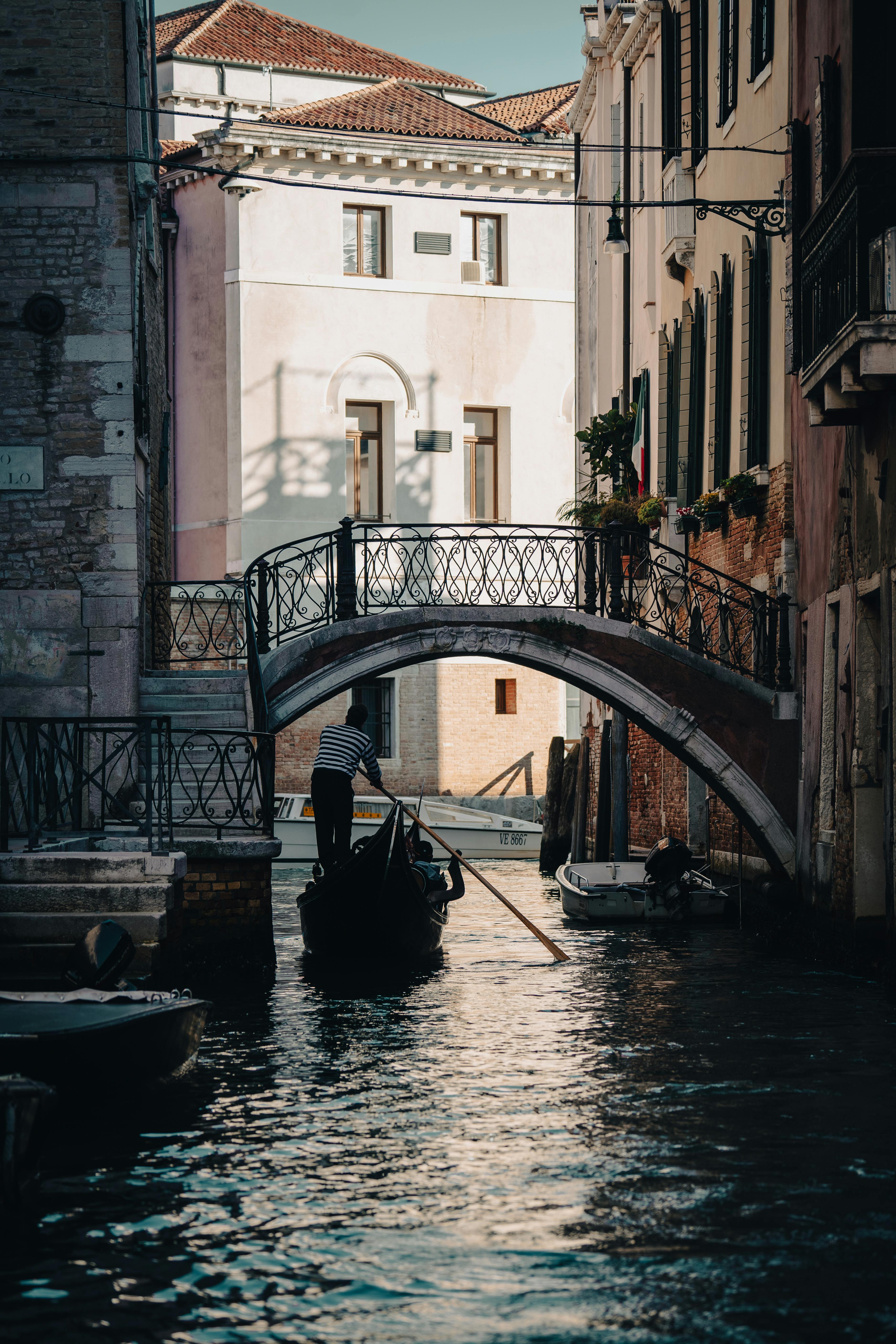
A traditional gondola seats up to five people and typically runs along the Grand Canal before turning into the quieter back canals, away from the main boat traffic. It's touristy by nature, but it's also genuinely the best way to see parts of the city inaccessible on foot.
Getting Around
There are no cars in central Venice — getting around means walking, vaporetto (water bus), or water taxi. Comfortable shoes matter more here than almost anywhere else in Europe, given the number of small bridges and uneven stone streets.
Where to Stay
Staying near St. Mark's Square keeps everything walkable, though rooms here run more expensive than in quieter, less central sestieri (districts) — worth weighing against how much time you'll actually spend near the square itself.
Loading comments…